
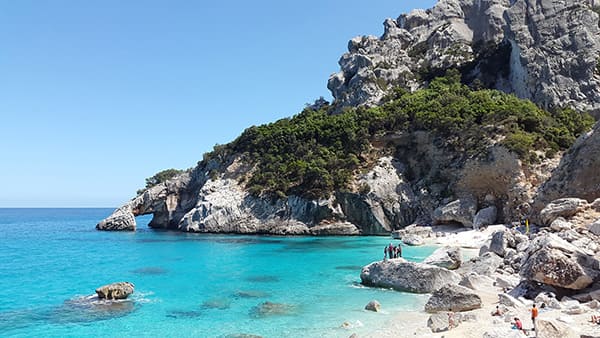

Sardinia is a wonderful destination for travel lovers, with its enchanting beaches, breathtaking landscapes, and a culture rich in history. If you’re planning a visit to this beautiful island, renting a car is the best way to explore Sardinia in all its beauty and diversity.
In this article, we’ll explore the advantages of renting a car, useful tips to save on rental costs, and how to book the ideal car for your Sardinia itineraries.
1 – The North-East Coast
It is one of the most renowned and exclusive tourist destinations in the world. It is located in an area of coastline about 55 kilometers long stretching along the northeast of the island. It is here that in the early 1960s, Prince Karim Aga Khan, along with some wealthy partners, built the small village of Porto Cervo and 5 hotels dedicated to elite tourism, along with a large golf course and many private villas located near renowned spots, including the most famous:
- Liscia di vacca
- Grande Pevero
- Capriccioli
- Pantogia
- Cala di volpe
- Romazzino
Due other famous tourist villages from the northeastern coast, often mistakenly associated with the North-East Coast area, are also worth a visit:
- Baja Sardinia
- Poltu Quatu
- Porto Rotondo
- Porto Rafael
2 – Gulf of Orosei
Located along the island’s southeastern coast, this gulf is considered a natural monument due to the beauty and integrity of its environment. It is a very high stretch of coast, with limestone cliffs plunging into the sea, alternating with wonderful fine sandy coves. Here are some of the must-see beaches and their crystal-clear waters:
- Cala Luna
- Cala Sisine
- Cala Mariolu
- Cala Goloritzè
- Cala Biriola
Given the area’s geological structure, it also offers caves worth visiting, such as:
- Bue Marino Caves: the entrance is formed by two arches, and before extinction, it was inhabited by the monk seal. It’s now accessible for about 900 meters.
- Ispinigoli Caves: located in the Supramonte of Dorgali, requiring a descent of 280 steps into the underground.
3 – The Green Coast
The main feature of this area, located in the southwestern part of the island, are the vast sandy dunes that stretch almost a kilometer before plunging into the sea. It’s a must-visit for nature lovers who want to escape the hustle and bustle of city life and tourist resorts. The Green Coast offers a relaxing atmosphere with Mediterranean scrub, cliffs dropping into the sea, and stretches of golden sand. The beaches of the Green Coast are some of the island’s most beautiful and untouched.
If you choose this area for your holiday, don’t miss these magnificent spots:
- Le Dune di Piscinas: vast golden sand dunes up to 30 meters high (the tallest in Europe), often referred to as a “mini Sahara”.
- The Sugarloaf: a true natural monument, the highest sea stack in the Mediterranean, resembling the famous rock in Rio de Janeiro’s Bay.
- Porto Flavia and the Nebida Mine: part of the Sardinian Geomineral Park recognized by UNESCO, the entire installation was built by digging into the cliff overlooking the sea.
4 – Costa Rei
This stunning area is located along the southeastern coast of the island, along a breathtaking panoramic road winding through mountains, hills, and sea. Costa Rei is known for its extraordinary scenic beauty and is home to magnificent free beaches, ideal for family tourism.
The most famous beaches include:
- Santa Giusta Beach and Peppino Rock
- Cala Sinzias
- Cala Pira
5 – Cagliari, the Capital
Cagliari, the island’s capital, is a must-visit stop. Its name comes from the ancient Kalaris, home to important Mediterranean settlements: first the Phoenicians, then the Carthaginians, the Romans, and later the Pisanians, Spaniards, and Piedmontese. It is a city rich in history, evident in its palaces and churches, some of which include:
- Bastione Saint Remy
- Sanctuary of Bonaria
- Santa Maria Cathedral
- Civic Palace
- San Pancrazio Towers
Nearby, you’ll also find the island’s natural wonders, where you can admire a wide variety of animal and plant species:
- Molentargius Park
- Poetto Beach
4 – Costa Rei
This splendid area is located on the southeastern coast of the island, along a breathtaking panoramic road that winds between mountains, hills, and the sea. Costa Rei is an area of extraordinary scenic beauty characterized by magnificent free beaches, ideal for family tourism.
The most famous beaches are:
- Santa Giusta Beach and Peppino Rock
- Cala Sinzias
- Cala Pira
5 – Cagliari, the Capital
Cagliari, the island’s capital, is an unmissable stop. Its name comes from the ancient Kalaris, a major port in the Mediterranean center for several important settlements: first the Phoenicians, then the Carthaginians, the Romans, and later the Pisani, Spaniards, and Piedmontese. It is a city rich in history, evident in its palaces and churches, including the following:
- Civic Palace
- The Towers of San Pancrazio
In the immediate vicinity, there are also natural wonders that characterize the entire island, where you can admire a rich variety of animal and plant species:
- The Molentargius Park
- Poetto Beach
6 – Maddalena Archipelago
The Maddalena Archipelago consists of around 60 islands and islets located in the northeastern part of the island, between Corsica and Sardinia, within a marine and terrestrial national park. You can visit them and enjoy the beautiful beaches of the archipelago by taking a small ferry from Palau, where you can also board your car to reach the two main islands:
- La Maddalena
- Caprera
Once you reach these islands, you will need to rent a private boat to visit the other islands that can be considered a true natural paradise:
- Santo Stefano
7 – Alghero, the Catalan City
This small city, located on the northwestern coast, is worth a visit. The main features are its walls and its historical center with Gothic Catalan buildings. Its inhabitants still speak a dialect identical to the Spanish Catalan language.
Alghero, moreover, is one of the few cities on the island with beaches in the city, easily reachable on foot or by public transport. Here is what you absolutely must not miss:
-
- Spanish Towers and Bastions
-
- Cattedrale di Santa Maria
-
- Palmavera Nuragic Complex
-
- Capo Caccia and Neptune’s Grotto
-
- Anghelo Ruiu Necropolis
8 – Pula
Among the must-visit places in Sardinia with a rental car is Pula, a picturesque town located on the southwestern coast. This charming town is famous for its historical charm and magnificent beaches stretching along the coastline. With a rich history rooted in the ancient Phoenician civilization, Pula is a true archaeological treasure, with points of interest such as the impressive Nora area, an ancient Roman city overlooking the sea.
In addition to its historical importance, Pula is also a tourist-friendly destination, where visitors can relax on the golden sandy beaches, immerse themselves in the crystal-clear waters of the Mediterranean Sea, and taste delicious dishes of local cuisine in restaurants and trattorias. With its mild climate and relaxed atmosphere, Pula is an enchanting place to spend an unforgettable vacation surrounded by natural beauty and the ancient history of this fascinating Sardinian region.
9 – Gorropu Gorge
The Gorropu Gorge is a natural wonder located in the heart of Sardinia, precisely between the regions of Barbagia and Ogliastra, as mentioned earlier, within the mountainous complex of the Supramonte. This canyon, considered the deepest in Italy, is a spectacular testament to the erosion caused by the waters of the Flumeneddu River, which have created a majestic split in the landscape.
This area is known for being one of the wildest and most unspoiled regions of Sardinia, characterized by astonishing beauty. Access to the Gorropu Gorge is only on foot, accompanied by expert guides, and requires several hours of walking. The trail follows the river’s course, taking visitors through boulders, caves, cliffs, sinkholes, and nuragic settlements, offering a unique experience of exploration and discovery.
The trekking path along the gorge stretches for several kilometers and is divided into three difficulty levels: easy, medium, and difficult, allowing hikers of all levels to enjoy this natural spectacle. Along the way, one can admire a variety of plants and animals typical of the area, including endemic species such as oaks, junipers, and millennial yews, as well as mouflons and golden eagles.
For trekking enthusiasts and lovers of untouched nature, the Gorropu Gorge is a true paradise. Its wild and evocative beauty makes this place a masterpiece of nature, a world apart from the hustle and bustle of daily life. Those who visit Gorropu are fascinated and enchanted by its grandeur, leaving behind an indelible memory of this extraordinary adventure in Sardinia’s most authentic side.
10 – Asinara National Park
The Asinara Island is a natural treasure located in front of Punta di Capo Falcone, in the extreme northwestern part of Sardinia. With its 16 kilometers in length and a surface area of 52 square kilometers, the island is part of a marine protected area, the Asinara National Park, which preserves and protects its natural and scenic wonders.
The name “Asinara” comes from the presence of unique white donkeys that inhabit the island and have become the symbol of the park. These donkeys are particularly valuable from the perspective of biodiversity conservation.
The Asinara has an important history and has been a symbol of isolation over the centuries. In 1885, the island hosted a penal colony and a quarantine lazaret for tuberculosis patients, forcing local inhabitants to move to the northern part of Sardinia, where they founded the village of Stintino.