
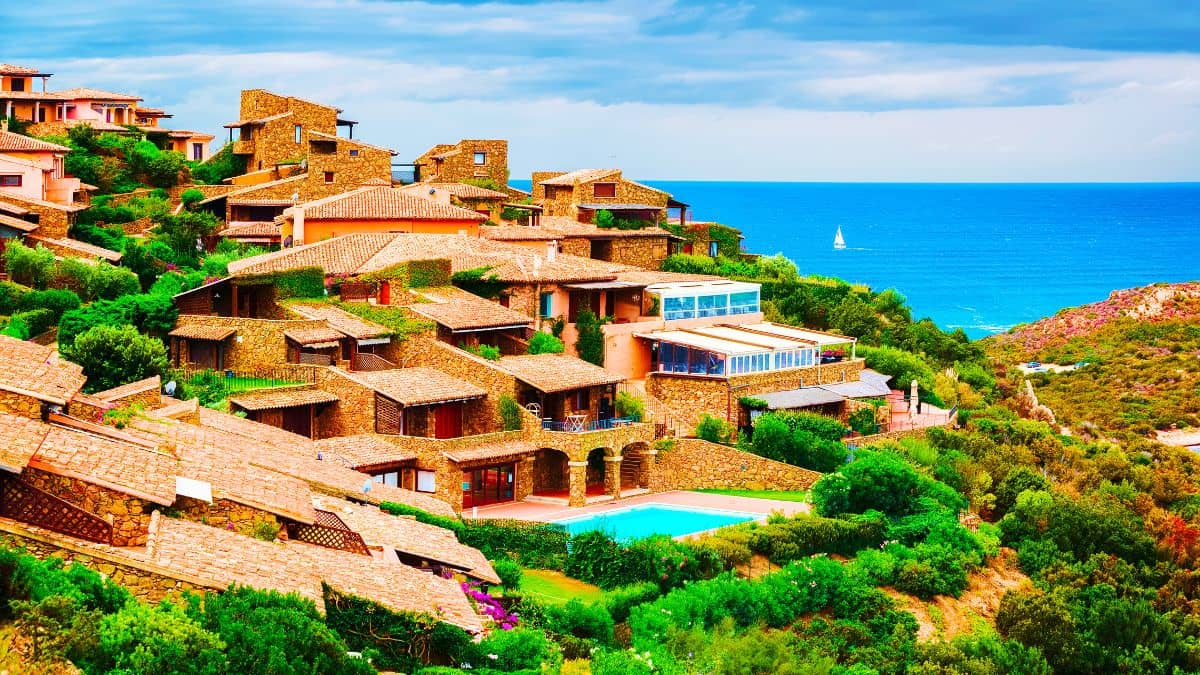

Olbia is often the arrival point for a holiday in north-eastern Sardinia, but it would be a shame to think of it only as a base for reaching the beaches of the Costa Smeralda.
Just a short distance from the city, you can discover granite villages, towns surrounded by cork oak forests, medieval centres perched on hilltops and coastal settlements overlooking the sea, all offering a very different side of Sardinia from its most famous beaches.
Starting from Olbia, you can plan several itineraries through Gallura and the north-eastern coast, combining art, Nuragic archaeology, local traditions, wine, nature and Mediterranean landscapes.
Among the places most worth visiting are San Pantaleo, Arzachena, Calangianus, Luras, Tempio Pausania, Aggius, Berchidda, Santa Teresa Gallura and Posada.
Why visit the villages near Olbia by car?
The most interesting destinations are not concentrated along a single road.
Some lie along the Costa Smeralda, others in inland Gallura, while others are closer to Mount Limbara or along the northern and southern coasts.
For this reason, renting a car at Olbia Airport allows you to plan much more flexible itineraries than if you rely exclusively on public transport.
This does not mean that every town is impossible to reach without a car, but having your own vehicle means you can combine several villages in the same day, stop at archaeological sites along the way and add a beach or excursion without depending on transport timetables.
Before setting off, you can also browse the Ellepi rental car fleet and choose a vehicle that suits the kind of itinerary you are planning.
San Pantaleo: the artists’ village on the edge of the Costa Smeralda
Among the most charming places to visit from Olbia, San Pantaleo is probably the one that best combines Gallurese tradition with a contemporary atmosphere.
This small village lies within the municipality of Olbia, surrounded by the dramatic granite peaks of the Cugnana massif. It developed around the church dedicated to San Pantaleo and still features architecture inspired by the traditional rural stazzi of Gallura.
Today it is known as an artists’ village thanks to its studios, craft workshops, ceramicists, painters, sculptors and small boutiques.
The heart of the village is the small square in front of the church, made particularly striking by the granite mountains rising behind it.
The Thursday market
If you can choose which day to visit, Thursday is particularly interesting.
During spring and summer, San Pantaleo hosts its famous market, with crafts, local products, antiques and artistic creations. It is one of the events that has contributed most to the village’s popularity.
After your visit, you can continue towards some of the most beautiful beaches in the area, including Rena Bianca, Razza di Giunco, Petra Ruja and Liscia Ruja.
San Pantaleo is therefore ideal if you want to plan a day with a village visit in the morning, lunch in Gallura and the beach in the afternoon.
Arzachena: Nuragic archaeology and the historic heart of coastal Gallura
Around 25 kilometres from Olbia lies Arzachena, the town that gives its name to the wider area in which much of the Costa Smeralda is located.
The centre is characterised by pink granite and pale stone, small squares and flower-filled corners, creating an atmosphere very different from the glamorous resorts of nearby Porto Cervo and Baja Sardinia.
But the main reason Arzachena deserves a full day is its archaeological heritage.
La Prisgiona and Coddu Vecchiu
In the Capichera valley lies La Prisgiona, one of the most important Nuragic complexes in Gallura.
The site includes a fortress with a central tower and side towers, together with a large village extending over roughly five hectares. Nearby stands the Coddu Vecchiu Giants’ Tomb, easily recognised by its monumental granite stele, around four metres high.
The surrounding area is also home to the Albucciu nuraghe, the Li Muri necropolis, the Li Lolghi tomb and the small Malchittu temple.
It is therefore an especially worthwhile stop for anyone who wants to understand that the Costa Smeralda area has a history stretching back thousands of years, long before its modern tourism development.
You can then continue towards Porto Cervo, Cannigione or the beaches along the coast.
Calangianus: the town of cork
Leaving the coast and heading inland through Gallura, you will reach Calangianus, one of the area’s main centres for cork production and craftsmanship.
Here the landscape changes completely: the sea gives way to woodlands, cork oak forests and the granite scenery of Mount Limbara.
One of the most interesting places to visit is the Cork Museum, housed in the former Capuchin convent, built in the early 18th century. The museum displays historic machinery and cork artefacts, offering an insight into one of Gallura’s most distinctive traditional industries.
In the historic centre you can also see granite buildings and churches, while the surrounding countryside contains important archaeological remains.
The Pascareddha Giants’ Tomb
Among the cork oak woods of Badu Mela stands the Pascareddha Giants’ Tomb, a Bronze Age monument surrounded by one of the most atmospheric landscapes of inland Gallura.
Calangianus is a good choice for travellers interested in traditions, archaeology and rural landscapes, away from the busier coastal resorts.
Luras: dolmens, traditions and one of Europe’s oldest wild olive trees
A few kilometres from Calangianus lies Luras, one of the most important destinations missing from the previous version of this guide.
The town retains a strong Gallurese identity and is characterised by granite buildings, historic churches and significant prehistoric remains.
In the centre you can visit the Galluras Museum, dedicated to local life and traditions.
The area is also known for its dolmens, evidence of human settlement here in prehistoric times.
S’Ozzastru, the ancient wild olive tree
One of the area’s most extraordinary attractions is located at Santu Baltolu di Karana, near Lake Liscia.
Here grows S’Ozzastru, a monumental wild olive tree with a circumference of around twelve metres and an estimated age of more than three thousand years, making it one of the oldest trees in Europe.
This is where the attraction is actually located, rather than in Santa Teresa Gallura.
Calangianus and Luras can easily be visited during the same day.
Tempio Pausania: the granite town at the foot of Mount Limbara
If you really want to discover inland Gallura, Tempio Pausania should not be missed.
It is larger than the other villages in this guide, but its historic centre is one of the most distinctive in Gallura.
It is often known as the “stone town” because granite dominates both its buildings and paved streets. It lies at the foot of Mount Limbara, surrounded by woods and natural springs.
Walking through the centre, you can visit St Peter’s Cathedral, the nearby Church of Santa Croce and Piazza Faber, dedicated to Fabrizio De André and featuring an installation created with the contribution of architect Renzo Piano.
Nearby attractions also include the Rinaggiu springs and the Majori nuraghe.
Tempio is also a good stop for anyone who wants to discover inland cuisine, Gallurese wines and the landscapes around Mount Limbara.
Aggius: granite, weaving and authentic Gallura
From Tempio Pausania, you can easily reach Aggius, one of the most atmospheric towns in inland Gallura.
The historic centre is formed by granite houses and narrow lanes, and the village has received the Italian Touring Club’s Orange Flag, a recognition awarded to small towns that stand out for their historic heritage, environment and quality of tourism.
Aggius has a particularly strong connection with the traditional art of weaving, which remains an important part of local identity.
Among the most interesting places to visit are the Oliva Carta Cannas Ethnographic Museum and the Museum of Banditry, which explores one of the most complex chapters in Gallura’s social history.
The town is also known for its traditional singing, including the famous choir that Gabriele D’Annunzio described as the “Cockerel Choir of Gallura”.
The surrounding landscape, shaped by huge granite formations, helps make Aggius one of the most authentic stops on this itinerary.
Visiting Tempio and Aggius in the same day
The two towns are close enough to combine easily.
You can spend the morning in Tempio Pausania, stop for lunch and then continue to Aggius in the afternoon.
It is probably one of the best itineraries for travellers who want to discover inland Gallura, far removed from Sardinia’s purely seaside image.
Berchidda: wine, music and Mount Limbara landscapes
South of the Mount Limbara massif lies Berchidda, a particularly interesting destination for travellers who enjoy wine, music and local traditions.
The town stretches along the mountain slopes and features Neoclassical and Art Nouveau buildings, as well as the parish church of San Sebastiano and the Church of the Rosary.
Berchidda has close links with Vermentino di Gallura wine and is home to the Wine Museum and the regional wine centre.
Internationally, however, the town is best known for Time in Jazz, the festival founded by trumpeter Paolo Fresu, which transforms the surrounding area into a large open-air stage every year.
During the festival, concerts and events take place in squares, countryside locations and natural settings throughout the area.
Even outside the festival period, Berchidda is worth visiting for anyone interested in food and wine, landscapes and Gallurese culture.
Santa Teresa Gallura: the seaside town facing Corsica
For a completely different landscape, head towards the northernmost part of Sardinia and visit Santa Teresa Gallura.
The town overlooks the Strait of Bonifacio, and on clear days you can see the coast of Corsica across the water.
The modern town was founded in 1808 by King Victor Emmanuel I and lies between two inlets: the harbour and Rena Bianca, a beach located just a short walk from the centre.
One of the town’s landmarks is the Longonsardo Tower, which overlooks the sea.
Capo Testa and Valle della Luna
One of the main reasons to dedicate a full day to Santa Teresa is the opportunity to combine the town with Capo Testa.
The headland is famous for its huge granite rocks sculpted by the wind, small coves and the spectacular Cala Grande, commonly known as Valle della Luna.
The area is also home to the Lu Brandali archaeological complex, with the remains of a village, funerary structures and a nuraghe dating from between the 14th and 10th centuries BC.
Santa Teresa is therefore one of the most complete destinations in this guide because it combines town, sea, archaeology and scenery.
Posada: a medieval village perched on a rocky hill
If you head south from Olbia instead, one of the most fascinating places to visit is Posada.
It was one of the most important omissions from the previous version of this guide.
The village stands on a limestone hill dominated by Castello della Fava and is included among Italy’s Most Beautiful Villages.
The historic centre is a maze of narrow lanes, arches, stairways and small squares climbing towards the castle.
From the upper part of the village, there are wide views over the Posada river valley, wetlands and the sea.
From the village to the beaches
One of the reasons Posada is particularly appealing for travellers with a car is how easily you can move from the medieval centre to the coast.
Nearby beaches include San Giovanni, Su Tiriarzu, Iscraios and Orvile, while the surrounding area forms part of Tepilora Park.
Posada is therefore perfect for a day combining a medieval village, nature and the sea.
What about San Teodoro?
San Teodoro is today primarily one of north-eastern Sardinia’s main seaside holiday resorts, known for La Cinta, Cala Brandinchi, Lu Impostu, its lagoon and its lively summer atmosphere.
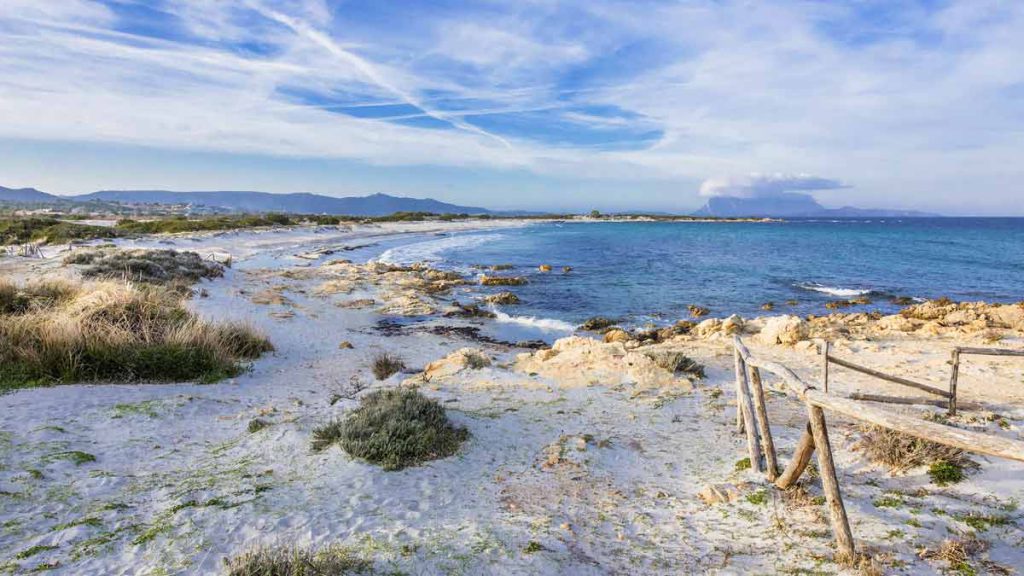
If your main goal is to visit historic villages and discover more traditional Gallura, I would prioritise San Pantaleo, Aggius, Tempio, Luras or Posada.
If, on the other hand, you want to combine beaches, restaurants, evening strolls and a lively summer atmosphere, San Teodoro is a very worthwhile stop.
Three driving itineraries from Olbia
If you have a car, you can organise your visits more efficiently and avoid unnecessary backtracking across Gallura.
Itinerary 1: Costa Smeralda and archaeology
Olbia → San Pantaleo → Arzachena → Porto Cervo
This is an ideal route if you have just one day and want to combine a traditional village, archaeology and the Costa Smeralda.
You can visit San Pantaleo in the morning, continue towards La Prisgiona and Coddu Vecchiu, and finish the afternoon or evening in Porto Cervo.
Itinerary 2: the granite heart of Gallura
Olbia → Calangianus → Luras → Tempio Pausania → Aggius
This route takes you deep into inland Gallura.
It is quite ambitious for a single day, so if you want to visit museums and attractions at a relaxed pace, it is better to split it into two: Calangianus and Luras on one day, and Tempio and Aggius on another.
Itinerary 3: heading north or south
For a day trip north, you can follow:
Olbia → Arzachena → Santa Teresa Gallura → Capo Testa.
Heading south:
Olbia → San Teodoro → Posada.
On this route, you can combine the medieval village of Posada with one of the nearby beaches.
How much time should you spend visiting the villages near Olbia?
If you are staying for a week, there is no need to visit every destination.
For a first trip, you could dedicate two or three days to inland areas and villages, alternating them with beach days.
If you only have one day, I would choose San Pantaleo and Arzachena.
With two days, I would add Tempio Pausania and Aggius.
With three or more days, you could also include Luras, Calangianus, Berchidda, Santa Teresa Gallura and Posada, depending on the rest of your itinerary.
Frequently asked questions about villages near Olbia
What is the most beautiful village near Olbia?
There is no single answer. San Pantaleo is one of the most scenic and is close to the Costa Smeralda, Aggius is one of the most authentic villages in inland Gallura, while Posada is especially charming thanks to its hilltop medieval centre.
What is the closest village to Olbia?
Among the places included in this guide, San Pantaleo is one of the easiest to reach. Telti, located inland around 15 kilometres from the city, is also very close and retains a strong Gallurese farming and pastoral identity.
Which villages can I visit in the same day?
San Pantaleo and Arzachena make an excellent combination.
Inland, you can combine Calangianus and Luras, or Tempio Pausania and Aggius.
Santa Teresa Gallura requires more time if you also want to visit Capo Testa and Lu Brandali.
What is the best place near Olbia for Nuragic archaeological sites?
Arzachena is probably the most complete choice thanks to La Prisgiona, Coddu Vecchiu, Li Muri, Li Lolghi, Albucciu and Malchittu.
Where should I go to discover authentic Gallura?
Tempio Pausania, Aggius, Calangianus and Luras offer a very different experience from the coastal resorts, with granite architecture, cork production, crafts, traditions and archaeology.
Which village can I combine with a beach day?
San Pantaleo combines easily with the beaches of the Costa Smeralda.
Santa Teresa Gallura gives you easy access to Rena Bianca and Capo Testa.
Posada, meanwhile, offers access to the beaches of San Giovanni, Su Tiriarzu, Iscraios and Orvile.
Discovering authentic Sardinia from Olbia
The real appeal of the area around Olbia lies in its variety.
In just a few days, you can go from the boutiques and artists’ studios of San Pantaleo to the Nuragic fortresses of Arzachena, from the granite houses of Aggius and Tempio to the cork oak forests of Calangianus, all the way to the medieval castle of Posada and the cliffs of Capo Testa.
It is a different way to experience Sardinia, and the perfect complement to days spent along the coast.
Having a car allows you to stop in small towns, make a detour to an archaeological site, reach a countryside restaurant or finish the day at the beach without planning your itinerary around public transport timetables.
If you want to start your trip directly from Olbia, you can book your rental car with Ellepi and create an itinerary tailored to the places you want to discover.