
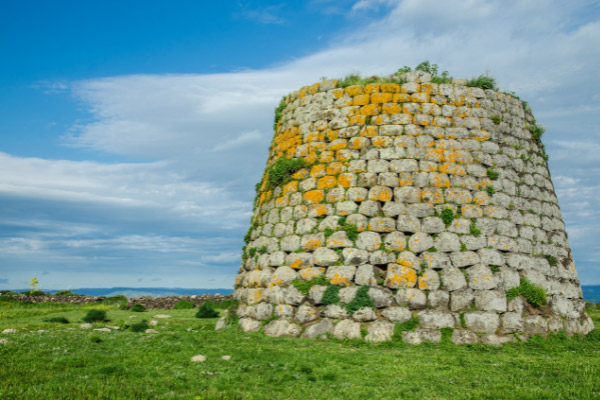

The nuraghe is the symbol of Sardinia—wrapped in mystery, history and ancient charm. Every year, tourists from all over the world visit the island to discover its most beautiful nuraghi. Today we want to guide you through some of the most remarkable archaeological sites. What do you need? A rental car to move around, comfortable shoes and a strong desire to explore.
Archaeological sites in Sardinia
Sardinia is home to many fascinating archaeological sites, capable of telling ancient stories, legends and traditions. The first thing that surprises visitors is the number of nuraghi found on the island. There are over 7,000, ranging from well-preserved examples to others that survive as ruins. Which nuragic villages are unmissable?
- Su Nuraxi in Barumini
- Palmavera Nuragic Complex in Alghero
- Nuraghe Arrubiu in Orroli
Su Nuraxi in Barumini
In Barumini you’ll find the best-preserved nuragic village on the island, declared a UNESCO World Heritage Site in 1997.
Su Nuraxi is the most famous and beloved site, both among tourists and locals. According to scholars, the first settlements date back to around 1500 BC, making it one of the oldest nuragic sites. Its origins remain a mystery: some believe it was a religious complex, others think it was an urban centre, while others associate it with military or defensive functions. Regardless of its purpose, its grandeur and historical importance are undeniable.
Palmavera Nuragic Complex in Alghero
The city of Alghero is rich in charm and attractions. Among them is the Palmavera Nuragic Complex, located very close to the city and easy to reach. Excavations are still underway, and today visitors can admire only the surviving structures. Scholars suggest that the original complex was much larger than what is currently visible.
We can only wait and see what will be discovered around the two main towers.
Nuraghe Arrubiu in Orroli
In Sardinian, arrubiu means “red”, which is why this site is also known as the Red Nuraghe. The name comes from the reddish colour of the stone caused by red lichens growing on its walls.
Nuraghe Arrubiu is composed of five main towers, a feature that distinguishes it from other nuraghi, which typically have four.
Archaeologists have uncovered artefacts from prehistoric times at this site.
What are nuraghi?
If you visit Sardinia, you can’t miss a nuraghi tour—especially if you love history. Between a paradisiacal beach and a search for traditional Sardinian murals, a perfect holiday must also include a visit to the island’s most extraordinary archaeological sites.
Nuraghi are one of the most important traces of the island’s ancient civilisation. These Sardinian pyramids, commonly called nuraghi (from “nur” meaning heap of stones), are large, truncated-cone stone buildings. They fall into two main categories:
- corridor nuraghi, or protonuraghi, which are less common;
- tholos nuraghi, cone-shaped towers with circular chambers, niches and storage areas, widespread across the island.
Their walls can reach up to 4 metres thick and over 20 metres in height. Their purpose remains uncertain: astronomical observatories, religious sites, military structures, defensive towers or lookouts. It is very likely that their function varied depending on their location and surrounding environment.
How can you explore Sardinia, the island of nuraghi? The best solution is to have your own means of transport to move freely across the territory. Alternatively, you can rent a car in Olbia, Cagliari or Alghero if you are arriving by plane.