
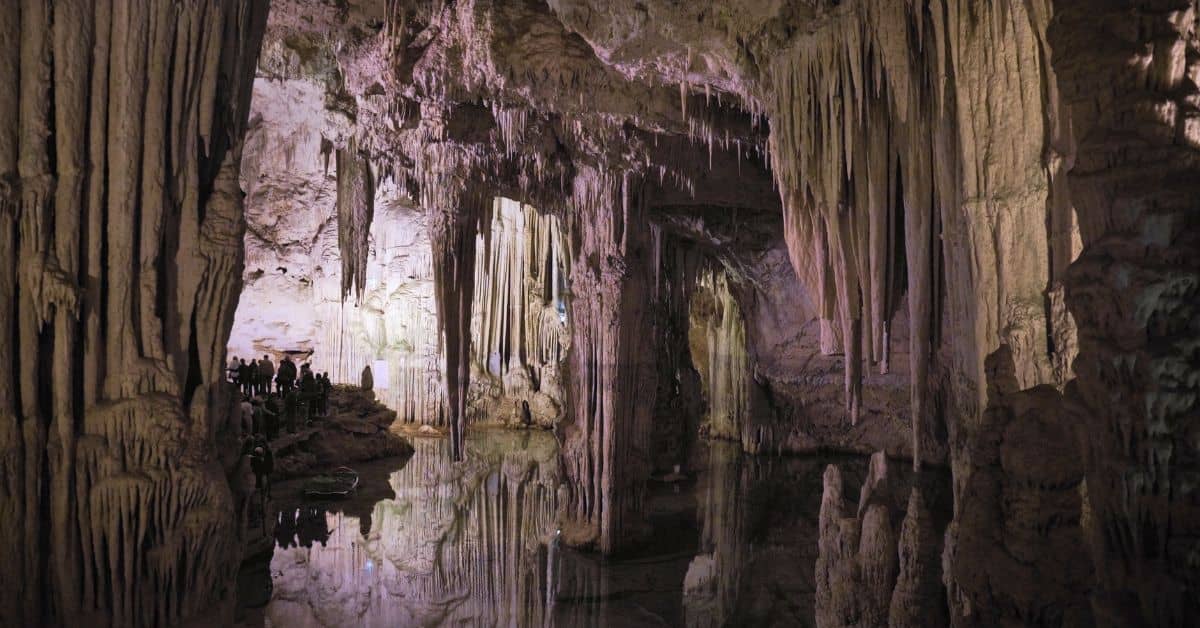

You have probably heard of the karst phenomenon, the erosive action of water that, over thousands of years, shapes limestone rock, creating fissures and caves, along with stalagmites, stalactites and alabaster-coloured columns that look sculpted by the most skilled artisan.
In Alghero, right in the heart of the Capo Caccia promontory, part of the regional natural park and the marine protected area, you’ll find magnificent karst caves such as the Nettuno Caves, with chambers that feel like cathedrals born deep inside Sardinia.
Renting a car at Olbia Airport is the best choice to reach Alghero in about 1 hour and 30 minutes and explore the area’s most beautiful caves with full freedom. Choose Ellepi for safe vehicles, flexible payments and highly qualified assistance.
The wonderful Nettuno Caves
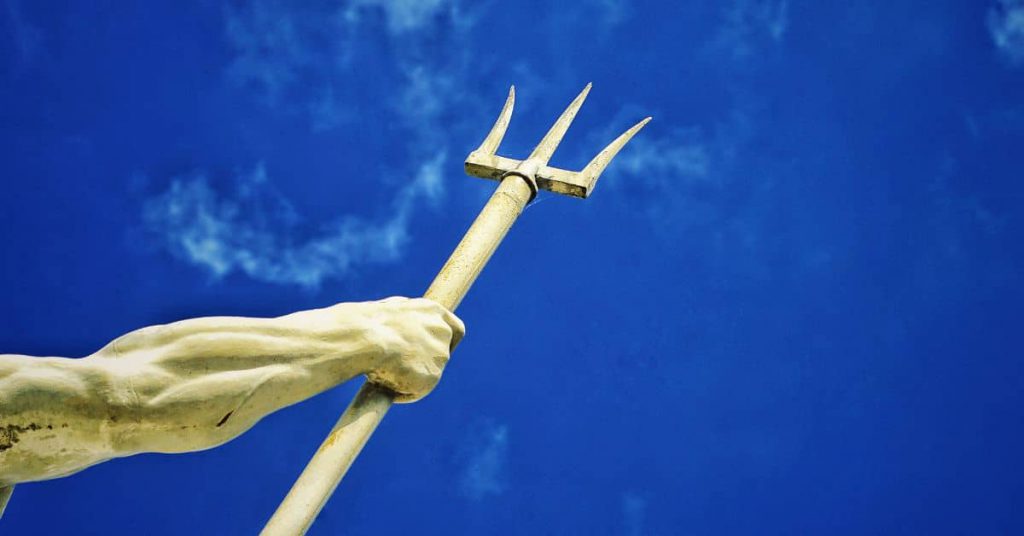
Legend has it that the Nettuno Caves were created by the God of the sea with his trident. When you stand before this vast karst cavity, you won’t struggle to believe the story: it is, in fact, one of the most astonishing natural jewels in Europe.
The discoverer’s name remains unknown: it was probably a fisherman named Ferrandino at the end of the 18th century, although it’s hard to believe far older people were unaware of the cave’s existence, starting with the Romans, who in the 1st century AD were settled in nearby Portus Nymphaeus, today’s Porto Conte.
You can reach the Nettuno Caves by boat departing from Alghero or from the small harbour of Dragunara, or conveniently by car using the vehicle you chose from the extensive Ellepi car fleet.
From Alghero, drive towards Fertilia, travel along a stretch of the SS127 bis scenic road, then take the Provincial Road 55 to the Capo Caccia promontory, where you’ll find the Escala del Cabirol.
Get ready to descend the 654 steps of this zig-zag staircase carved into the cliff, dropping from 119 metres above sea level.
Inside the Nettuno Caves, among walls that look almost like marble and stalactites resembling drapes, you’ll reach the Royal Hall, with 9-metre calcium columns that nearly touch the ceiling. This is the setting for Lake La Marmora, one of the largest salt lakes in Europe. Look out for the Christmas Tree, a conical stalagmite formation, and above all the Holy Water Font, the column rising from the water with small basins at the top where birds drink. A bit further on you’ll find the Pebble Beach, where visitors’ boats used to dock in the 19th century, when the cave was lit by candles.
Leave the Royal Hall and head to the Smith Hall, characterised by a column surrounded by flowstone formations that resemble the pipes of an organ.
Prepare to be speechless in the Lace and Fine Lace Hall, where the rock has formed shapes that look like lace, filigree and fringes.
Say goodbye to the Nettuno Caves from the Music Gallery, from where you can observe the cavern and imagine the times when a small orchestra played while visitors danced on the Pebble Beach.
The Green Cave
Driving along the Capo Caccia panoramic road, you’ll find the entrance to the Green Cave, a naturalistic and archaeological jewel that, according to legend, was once home to nymphs.
This cave, also located within the Porto Conte Regional Natural Park, preserves stalagmites and stalactites covered in algae, 200-million-year-old limestone rock and a very rare colony of madreporarians, ancestors of corals. This precious environment also hosted human life starting from the Early Neolithic, later becoming a Christian place of worship: in the 15th century an altar dedicated to Saint Erasmus was built here.
Much of the evidence was submerged by the brackish lake that fills the cave, with emerald reflections that explain the cave’s name. Graffiti, red pottery and funerary objects were identified thanks to underwater excavations: if you want to see the artefacts, visit Sassari and the Museo Sanna.
Nereo Cave
To visit Nereo Cave, named after the legendary father of the Nereids, you need to love diving. Reach Punta dell’Asino and dive into the waters that have submerged this treasure chest of biodiversity. The light filtering in reveals a subaquatic paradise populated by corals, sponges, sea lace and sea daisies, with the occasional lobster and grouper swimming just inches from your mask.
Exploring the cave, which descends to 30 metres deep, you’ll find a series of tunnels leading into other chambers where coral dominates.
The Nereo Cave is considered one of the largest in the entire Mediterranean basin.
In nearby Porto Conte, excursions are organised to the cave, suitable for both beginners and experienced divers, so you can enjoy this extraordinary cavity safely.
Broken Jugs Cave
Head towards Capo Caccia near Alghero. From the promontory viewpoint, follow a path that winds through dense Mediterranean scrub, with dramatic cliff-edge stretches overlooking the sea, until you reach the Broken Jugs Cave.
The name of this karst cavity comes from the large quantity of ceramics found inside, which scholars interpret as evidence that this place, in pre-Nuragic times, was used as a sacred site with rituals.
At first the cave may seem quite narrow, but then it opens into a chamber rich in stalactites and stalagmites, in a remote and rarefied atmosphere with strong emotional impact.
The view from the cave’s entrance is truly extraordinary, embracing Foradada Island with the tunnel of the Grotta dei Palombi clearly visible, Porto Conte and its bay, Cala d’Inferno, Punta Giglio and, in the distance, the town of Alghero.
Sorrel Cave
If you love Jules Verne novels, reach the Sorrel Cave, almost hidden among the cliffs of the Capo Caccia promontory. This karst environment is highly labyrinthine, with a network of tunnels branching off the main corridor. For that reason, you can only visit the cave with specialised guides.
Stalagmites, calcium columns and stalactites will accompany you from the Great Cavern, opening directly onto the sea, down into the meanders of the earth. At times you may find yourself crawling, or walking with your feet in water; in other sections you may need harnesses and ropes.
The alternation between marine and freshwater environments inside the cave has created a precious ecosystem that deserves strict protection, and it’s an unmissable stop on your tour of the most beautiful caves in Alghero.