


Have you booked a vacation on the island and are unsure about which route to take? In this article, you will discover the most beautiful itineraries in Sardinia to explore by car and get inspired by our tips to create the best DIY Sardinia tour tailored to your needs!
Whether you’re traveling with family, friends, as a couple, or solo, the island offers routes suitable for everyone. Let’s explore them together.
Why Rent a Car in Sardinia
Sardinia is undoubtedly an unmissable summer destination, with its dream beaches, crystal-clear waters, and Mediterranean climate. It has become a very popular spot for both Italians and foreigners.
Visiting the island by car is the most practical solution for moving around with complete freedom and autonomy. While there are bus connections between various locations, many picturesque places like beaches and coves are not accessible by public transport. Furthermore, relying on public transportation means adhering to specific schedules and predefined routes.
For these reasons, renting a car in Sardinia is the easiest choice: you will have a vehicle at your disposal for several days, to be returned comfortably at the airport or port. Additionally, renting a car locally allows you to fly to the island, making your trip faster and less tiring.
If you’ve decided to take a Sardinia road trip and are arriving in Olbia, you can browse our car rental options on our site and choose your preferred vehicle from a wide selection: from compact city cars to minivans for group trips, not forgetting scooters. Once chosen, the car will be ready at the airport (or your preferred location) upon arrival to accompany you on your fantastic vacation.
What to Consider Before Renting a Car
Before renting a car, it is essential to choose the most suitable vehicle for both the destination and the number of people.
For a family trip, you should opt for a spacious and comfortable car, equipped with all the necessary amenities. It’s also important that the car has a large enough trunk to accommodate several suitcases. The ideal option for you is a station wagon that guarantees a spacious cabin and trunk.
For large families and groups of friends, the ideal choice is a minivan: these are large and comfortable vehicles, perfect for any situation. For large groups, you will certainly find the 9-seater minivan very appealing, especially if you’re planning an adventurous road trip and need practicality and comfortable seats.
If you’re thinking about a coast-to-coast trip with hard-to-reach destinations, challenging slopes, and many miles to cover, the choice should be a 4×4 vehicle. Designed specifically for this purpose, it will easily handle even the most difficult routes.
For those who enjoy two-wheel journeys, scooters are a fun and great alternative, especially for young travelers. Scooters are perfect for seaside vacations and for touring villages in peace.
Finally, it’s always important to check which documents are required for car rental. Generally, you’ll need to present your driver’s license, identity card, and credit card. Be sure to check the driver’s requirements, especially if you’re a new driver.
In the next sections, we will suggest some routes to explore by car or scooter to discover a land full of wonders like Sardinia.
Route 1: North-East Sardinia
The first route we present includes a very famous location for luxury tourism and stunning beaches.
Located in the northeastern part of Sardinia, it’s one of the island’s most visited spots and features all the most famous tourist destinations: Porto Cervo, Baia Sardinia, and Arzachena.
Starting from Olbia airport, after renting your car, take the state road 125 and head towards Porto Cervo.
Porto Cervo: Luxury Holidays
Route 2: Alghero and the Coral Riviera
Another symbol of the beauty of the Sardinian territory is undoubtedly Alghero with its magnificent coastlines in the north-west of Sardinia.
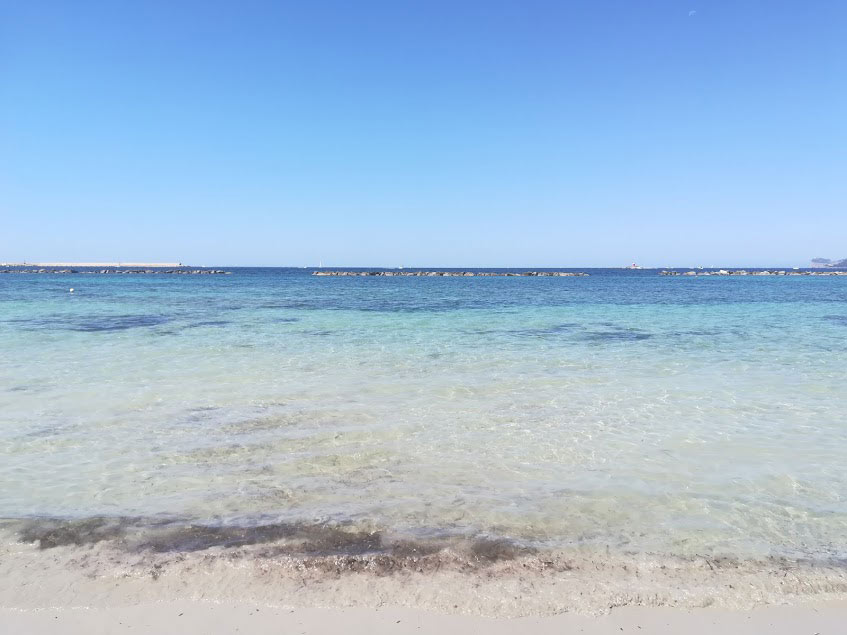
Alghero is a very unique city, dominated for a long time by the Spanish, it is the only place in Sardinia and in Italy where Catalan is spoken, which is also an official language. It is also known as the Sardinian Barceloneta, the little Barcelona.
The city, in the province of Sassari, is the fifth largest in the region by population. It represents a gateway to the island, thanks to the Fertilia airport. Today, it is considered the capital of the Coral Riviera, because of the red coral found in its seas, fished by underwater divers. This activity has been of great economic and cultural importance for centuries, so much so that coral is even found in the city’s coat of arms.
Let’s now explore the main attractions of Alghero and its surroundings that you can visit to create a truly special Sardinian tour.
The Historic Center of Alghero
The historic center is a real gem that you cannot miss. The four centuries of Spanish rule are still present in the culture and architecture: with the cobbled streets and the sea views, getting lost in its streets will be an unforgettable experience.
If you take a moment to observe the street signs, you’ll find two names: one in Italian and one in Catalan.
The perfect souvenir to take home is a red coral jewelry piece, a specialty of the area, as Alghero is located on the coral coast. You will find many in the shops waiting to be discovered.
Among the most interesting places in the historic center, you’ll definitely want to visit the Church of San Michele Arcangelo, an example of baroque art with its colorful dome entirely decorated using mosaic techniques. A visit to the coral museum, located in the town center in a 20th-century Liberty-style villa, is also a must, offering a 360-degree overview of the world of coral. Also worth seeing are the Piazza Civica and the Cathedral of Santa Maria with its bell tower.
The Neptune Caves
An excursion that you absolutely must take in the surroundings of Alghero is a visit to the Neptune Caves. There are various ways to reach the caves, located at Capo Caccia.
If you arrive at the Neptune Caves by boat from the port of Alghero, you will be directly at the entrance. If you instead reach the caves by car or bus (about 35 minutes), you will have to descend a scenic staircase with over 600 steps from which you can admire the entire coastline.
These caves are among the largest karst formations in Italy. During your visit, you will discover the beauty of the internal lake and the numerous stalactites and stalagmites formed naturally.
The Colorful Village of Bosa
Crossed by the Temo River (the only navigable river in Sardinia), Bosa is a town characterized by colorful houses, wrought iron balconies, and narrow streets. In this magical village, located about 35 minutes by car from Alghero, a truly special atmosphere reigns.
A visit to the Malaspina Castle, dating back to the 12th century, is worth the effort. You can reach it on foot, and it offers a panoramic view of the entire town. You can also discover the ancient tradition of tanneries at the Museum of Tanning and admire the beautiful frescoes in the town’s cathedral, the Church of the Immaculate Conception. At the mouth of the Temo River stands the tourist river port, and next to it, Bosa Marina, a location awarded the Blue Guide by Legambiente.
The Beaches Near Alghero
Even the coast surrounding Alghero offers many beaches where you can spend a pleasant day by the sea, particularly:
- Lido San Giovanni: This is the beach closest to the historic center, and you can easily get there on foot. It is very spacious and offers the possibility to rent deck chairs and umbrellas. It’s perfect for families with young children because the water is very shallow.
- Maria Pia Beach: A large white sandy beach with a pine forest behind it. It has a very spacious parking area available.
- Le Bombarde Beach: Located north of Alghero, towards Porto Conte. It offers many services, including deck chairs, pedal boats, and restaurants.
- The Lazzaretto Beach: This beach is right next to Le Bombarde, with sandy shores and stunning transparent waters.
Route 3: Cagliari and the South of the Island, Travel Tips
If you’d prefer to explore southern Sardinia, which is less focused on luxury tourism than the north and inevitably more authentic, then this third route is for you.
But what are the most beautiful destinations to visit? Let’s discover them together.
Cagliari and its Millennial History
Cagliari is a must-see in any South Sardinia itinerary. The city, the regional capital, impresses visitors with its ancient walls in the Castello District, its churches, and characteristic narrow streets that climb up to the bastions.
You can’t miss a visit to the Bastione di Saint Remy, one of the most majestic and prestigious monumental complexes. From the bastion, you can access a beautiful panoramic terrace that offers an unforgettable view of the city and the sea.
Take the time to visit the Cathedral of Santa Maria, the Roman amphitheater, and the La Marina District with its port and waterfront. Here, you can wander through the numerous streets of the center, try one of the many restaurants, and enjoy a nice meal of typical Sardinian cuisine. Don’t miss the other historic districts of the city: Villanova, full of historical and archaeological testimonies, and Stampace, once home to the workshops of artists and craftsmen, both of which preserve Cagliari’s traditions.
Let’s not forget about the city beach, Poetto, a vast beach stretching over eight kilometers. You will find soft sand, turquoise waters, and, above all, relaxation, but also fun and sports for more active travelers. From the beach, you can head to one of the many kiosks for an aperitif at sunset with a sea view.
Villasimius: A Dream Sea
Villasimius is the most sought-after vacation spot on the southeastern coast of Sardinia. Crystal-clear waters, white sand, and vibrant social life make it the perfect destination for travelers who want it all.
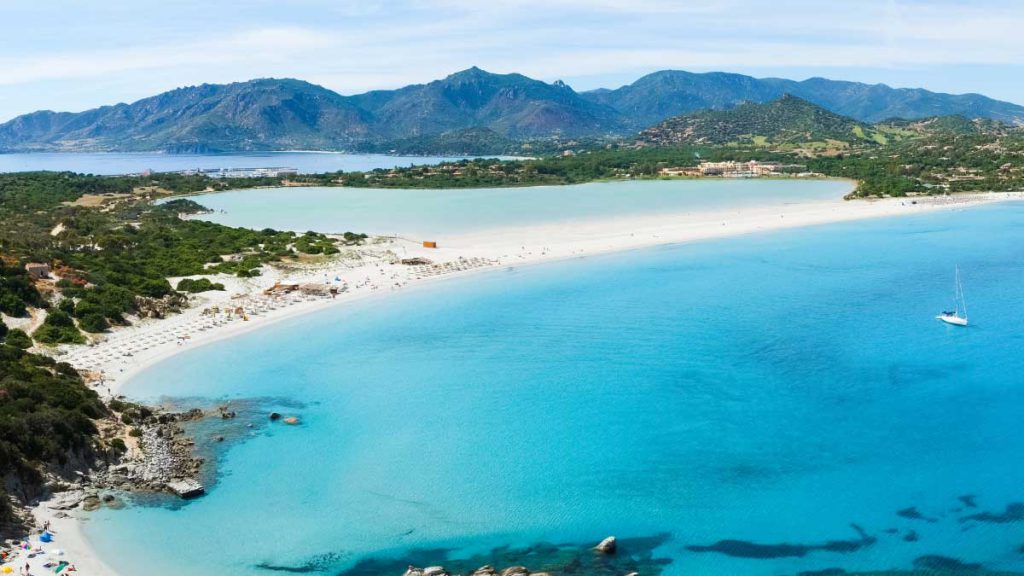
The area is characterized by a ring of beaches, interspersed with cliffs and the Capo Carbonara promontory. Starting from Capo Boi, the southern boundary of the marine protected area, you’ll follow the panoramic road to reach the splendid beaches of Porto sa Ruxi, Campus, and Campulongu, perfect if you want to immerse yourself in a landscape of white sand dunes framed by typical Mediterranean vegetation. You’ll also find the unique Spiaggia del Riso, which stands out for its ‘grains’ that make up the beach.
On the eastern side, prepare to be amazed by breathtaking sights, such as Porto Giunco, a long stretch of soft, light sand with pink hues, nestled between the lagoon and the cerulean sea, with the Notteri Lagoon behind it, a favored habitat for flamingos and other bird species.
Heading north, there is the wonderful Punta Molentis, another pearl of the Villasimius territory, with transparent waters and white sand on one side, and the granite quarry on the other.
Beyond the sea, you can also enjoy shopping and particularly Sardinian cuisine, with typical dinners featuring local fish.
The Nora Archaeological Site
The beauty of the sea and the grainy sand blend with ancient history in this unique and unmistakable location. The Nora Beach is one of the most famous in the Pula area due to the nearby ruins from Roman times.
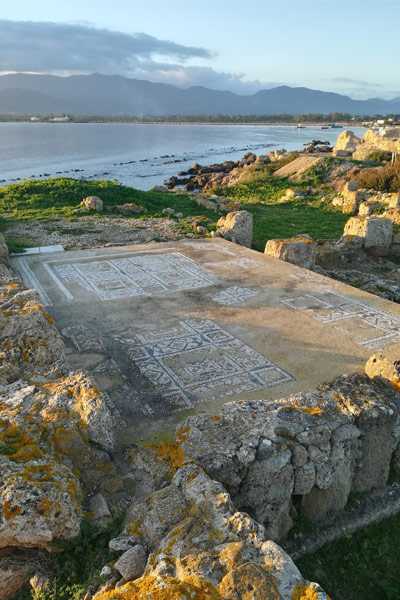
The ancient city of Nora is one of the most beautiful archaeological sites in Sardinia: a city that was first Phoenician, then Carthaginian, and finally Roman. It represents an important testament to the past passed down over three millennia. It was a major crossroads for trade and a port with an enviable position sheltered from the winds. It reached its peak during the Roman era, with about eight thousand inhabitants.
By doing snorkeling, you can admire the Roman ruins beneath the sandy seabed. The bay is surrounded by cliffs and the promontory where the Coltellazzo Tower stands. On days with the maestrale wind, it’s perfect for enjoying the sun and swimming in crystal-clear water, with a shallow seabed, ideal for children. It is also accessible to people with disabilities and has a large parking area, services, and refreshment points.
The Sulcis: The Islands of Sant’Antioco and Carloforte
The Sulcis, in the southwestern part of Sardinia, is a territory full of scenic beauty and a history marked by the mining development of the last century.
Speaking of mines, a must-visit destination is Porto Flavia, a port suspended halfway up a rocky cliff overhanging the sea, from which a long tunnel begins, near the Masua Beach, with a view of the Pan di Zucchero rock.
As you move from Iglesiente and head south, you’ll find two small islands where you can experience the most authentic seaside life: Sant’Antioco and Carloforte.
A fixed stop for visitors is the bisso museum in Sant’Antioco, where you can learn about the weaving of a special fiber (bissò) derived from a bivalve mollusk, the nacchera. The MuMa museum, on the other hand, summarizes maritime history and traditions, including the Latin sail. The town was founded by the Phoenicians around 700 BC and later conquered by the Carthaginians. The tophet and the necropolis (V-III century BC) remain as evidence, and they were later replaced by the Roman necropolis and a catacomb cemetery, unique in Sardinia.
Taking the ferry, you can reach Carloforte or the island of San Pietro, which preserves the language and culture of its founders, who came from the Tunisian island of Tabarka and were originally from Liguria. The Tabarchini were granted permission by King Carlo Emanuele III to colonize the uninhabited island. The same fishermen would later go on to found Calasetta on the island of Sant’Antioco. An unmissable experience is the Carloforte cuisine. Between May and June, the international gastronomic event Girotonno is held, promoting local specialties with culinary competitions and cooking shows.
Now, all you have to do is choose your preferred itinerary and take a road trip around Sardinia with one of our cars: pick the one that suits you and embark on your adventure!