

With its white beaches and sheltered coves, Sardinia is a dream destination for sea lovers. Thanks to its landscape, this land rich in history and ancestral charm is not known only for some of the world’s most beautiful stretches of sand. Sardinia feels wild, especially when you head inland, towards its beating heart, full of secrets that fascinate curious travellers who want to go beyond the surface, also because travelling by car makes exploration far easier.
One of these gems is Giara di Gesturi Park, an unspoilt place where you can enjoy a truly nature-led experience.
Below you will find what to see and how to get to Giara di Gesturi Park, plus a few useful ideas for enjoying the route if you book a car from Olbia Airport with Ellepi car hire.
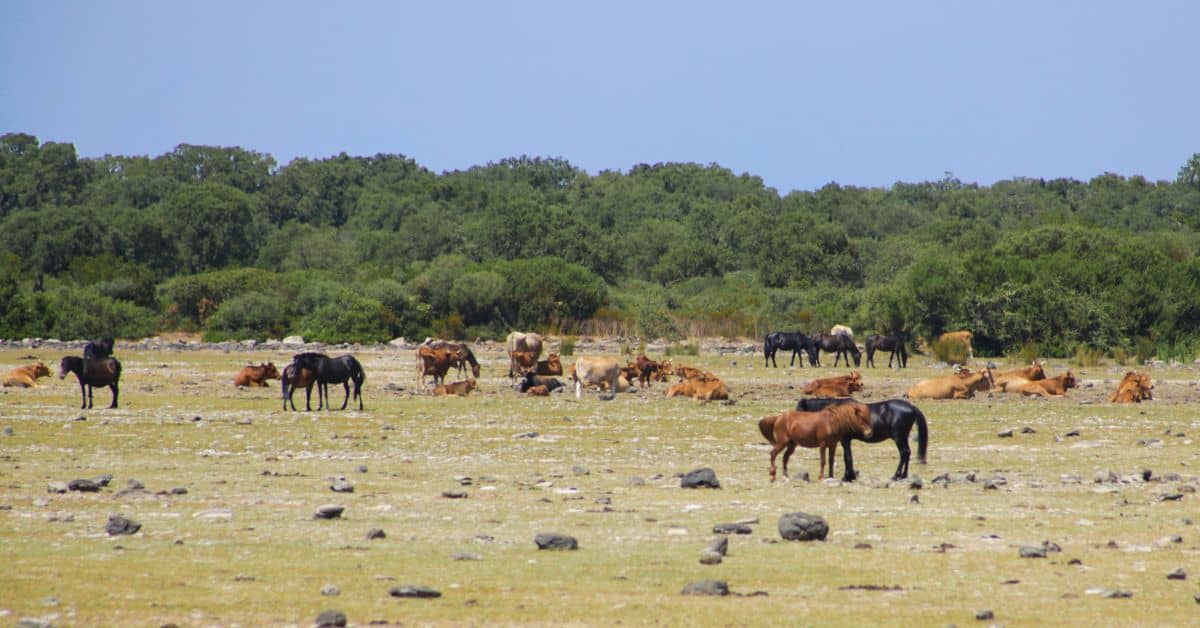
The Giara horses: a truly wild landscape
The park’s reputation is closely linked to the famous Giara horses. Among the last wild horses in Europe, these elegant animals find shelter in an untamed environment.
In the Middle Ages, these horses moved across the island in large free-roaming herds. Two traits make the Giara horses distinctive: their small, compact build and a dark bay coat, with manes and tails that can grow remarkably long.
These extraordinary animals adapted perfectly to the surrounding habitat, in a close balance with the Giara plateau, where food and water are available during the winter months.
This is linked to the plateau’s shape: natural depressions, known locally as Paulis, tend to fill with water. In some cases, such as Pauli Maiori and Pauli Piccia, real reserves form and can provide hydration and nourishment well into summer.
If you visit this enchanting place, you may spot family groups of Giara horses that still walk the trails or keep hidden behind shrubs.
The richness of Mediterranean flora
From a wildlife point of view, Giara di Gesturi Park offers a memorable experience, made even richer by the extraordinary variety of plant life: a true tribute to Mediterranean vegetation, with many iconic species spread across the area.
Once covered by dense woodland, this zone remains highly interesting for nature lovers, thanks to typical trees such as cork oak, holm oak and downy oak.
For a sensory walk through Mediterranean scents, you can smell myrtle, helichrysum and strawberry tree. In spring, the experience reaches its peak, when the park lights up with striking colours. You may come across vivid wild cyclamen or notice wild orchids speckled with different shades. Along the route, you can also see aquatic buttercups with pale tones covering the Paulis, creating a spectacular natural oasis.
Across the plateau, over 350 species have been identified, including very rare plants such as Morisia monantha, a perennial with winter flowering, recognised by its small, intense yellow blooms scattered throughout the park.
This plant has an evocative local name: in Sardinian it is known as Ebra de Oru, “golden grass”. The link between this land and the plant is so strong that Morisia also lends its name to the park’s botanical garden, where you can admire exceptional natural treasures.
A millennia-long heritage of history and architecture
Near Giara di Gesturi Park you can also explore extraordinary archaeological and historical sites. One highlight is the Nuraghe of Barumini (listed among the 3 most beautiful nuraghi in Sardinia): a quadrilobate complex with a central tower that originally exceeded 19 metres and included three tholos (chambers) on multiple levels.
Historians date the construction of this spectacular site to around 1478 BC.
The central keep is surrounded by four towers aligned with the cardinal points. After the 11th century BC, access required passing through a small entrance door set 7 metres above ground level. This feature increased the structure’s defensive strength. Today, visitors can reach and explore the site easily when travelling around the area near the park.
About twenty kilometres away, you can stop at Sanluri Castle, the only one still inhabited out of almost a hundred castles built in medieval Sardinia. Once associated with Eleonora d’Arborea, the castle evolved over the centuries and today hosts several museum spaces.
From the same medieval period comes the castle on the Las Plassas hill, built to mark the border between the Giudicato of Arborea and the Giudicato of Cagliari.
Near Giara di Gesturi Park you will also find Villanovaforru, a charming village in the Marmilla region, known for the Nuraghe of Genna Maria. Archaeological work there has continued since the late 1960s, and the site has produced valuable finds that help reconstruct Nuragic daily life, including deer bones, food remains and much more.
At the Archaeological Museum of Villanovaforru, housed in a beautiful 19th-century building, you can see many of the discovered artefacts and follow a route through later civilisations, with Punic and Roman items as well.
What to eat and how to reach Giara di Gesturi Park
A visit to Giara di Gesturi Park feels even better with a tasting of the “Menu Tagliere” offered by the visitor centre. Local Sardinian products arrive on a convenient sharing board with cheeses and cured meats, followed by coffee and a myrtle liqueur. From the refreshment point you can enjoy a remarkable panoramic view over the territory.
Now you just need to plan your visit and choose the right model from the many options in our car fleet!
Getting there is straightforward: from Olbia, after picking up your car, you can reach the area in just under 3 hours, following State Road 131 that crosses inland Sardinia and the western side of the island.
The reference exits are Mogoro or Collinas. From there, continue along SP43 or SP46 towards the village of Tuili, then follow signs for the Nuraghe of Bruncu Madugui.
Book your car at great rates, pick it up at Olbia Airport, and set off to discover one of Sardinia’s most fascinating historical and natural treasures.