
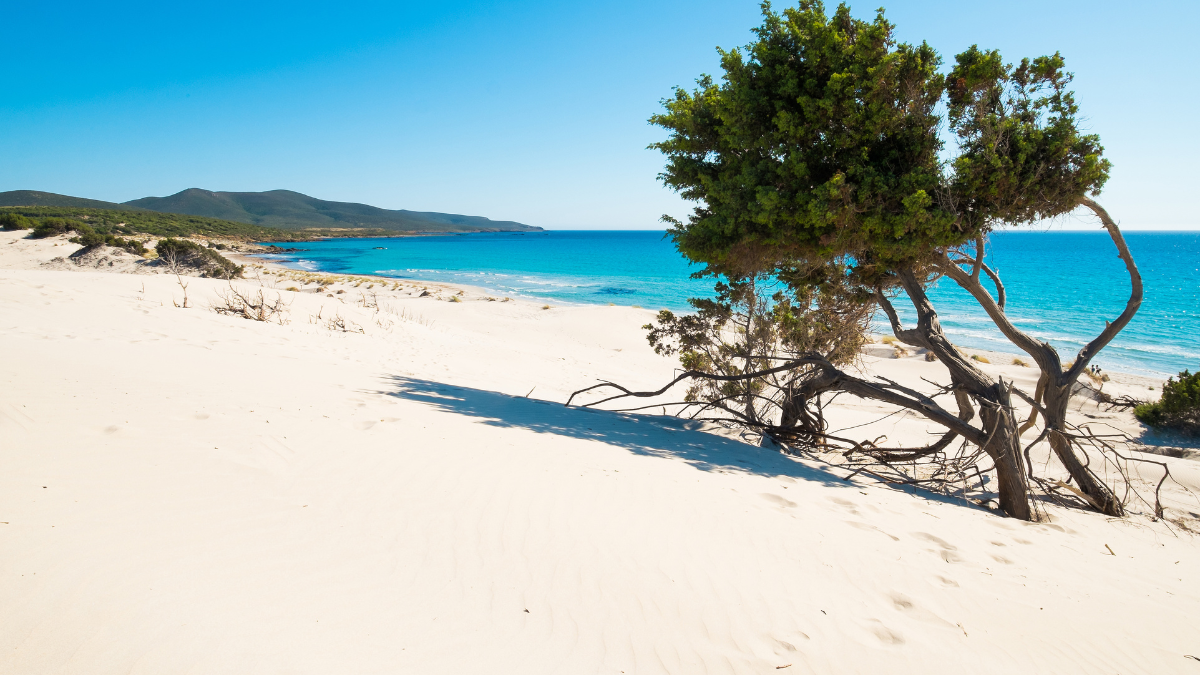

Which part of Sardinia has the most beautiful beaches? Giving a definitive answer is almost impossible. The island constantly changes character, and each stretch of coastline offers a different landscape.
Southern Sardinia, however, brings together some of the island’s most spectacular coastal scenery within a relatively compact area: white-sand bays and turquoise water around Villasimius, long beaches between Costa Rei and Castiadas, impressive dunes in the Sulcis, sheltered coves along the Chia coast and almost desert-like landscapes on the Costa Verde.
For this reason, it is worth exploring more than just one destination.
If you are planning a road trip, having a car allows you to travel between Villasimius, Costa Rei, Chia, Teulada, Porto Pino, Iglesias and the Costa Verde, choosing each day’s destination according to sea conditions, wind and the type of beach experience you are looking for.
If you are starting from north-eastern Sardinia, you can browse our rental car fleet and plan a proper journey south, perhaps combining this itinerary with our guide to the most beautiful beaches in Sardinia.
What are the most beautiful beaches in Southern Sardinia?
If you have limited time and want to start with the most iconic destinations, make sure you include:
- Punta Molentis and Porto Giunco around Villasimius;
- Cala Pira and Cala Sinzias between Castiadas and Costa Rei;
- Su Giudeu, Cala Cipolla and Tuerredda in the Chia and Teulada area;
- Is Arenas Biancas and Porto Pino in the Sulcis;
- Cala Domestica, Scivu and Piscinas if you are looking for a wilder landscape that feels completely different from the tropical-looking beaches of the south-east.
This does not mean that the other beaches are less beautiful: they simply offer different experiences.
Villasimius: some of the most scenic beaches in south-eastern Sardinia
The Villasimius area is one of the easiest places to recommend if you are looking for pale sand, clear water, good facilities and very different coastal landscapes within just a few kilometres.
Punta Molentis: a postcard-perfect bay
Punta Molentis is one of the signature beaches of Villasimius and Southern Sardinia as a whole.
The sand is pale and very fine, with subtle pinkish tones along the water’s edge, while the sea shifts from turquoise to emerald green. The shape of the coastline creates a fairly sheltered bay with a shallow sandy seabed.
A small headland covered in Mediterranean scrub rises behind the beach: it is worth climbing up to admire the shape of the bay and the different colours of the water from above.
It is one of the most photographed beaches in the area and, for that reason, can be very busy during the high season.
Before setting off, always check the access rules in force for the year of your visit, as visitor limits and parking arrangements may change.
Porto Giunco: turquoise sea and flamingos
Porto Giunco brings beach, sea and wetland scenery together in a single landscape.
The beach is wide and pale, the seabed slopes gently, and directly behind it lies the Notteri lagoon, which is also frequented by flamingos.
One of the best viewpoints can be reached by walking up towards the Porto Giunco Tower, built in the 16th century: from here, you can see the sea, beach and lagoon all at once.
It is also a particularly good choice for families thanks to the available facilities and the gently sloping seabed.
Porto Sa Ruxi: three small bays between dunes and junipers
When travelling from Cagliari towards Villasimius, Porto Sa Ruxi is one of the first beaches that introduces you to the scenery of the Capo Carbonara Marine Protected Area.
The coastline is divided into three small crescent-shaped bays, separated by granite rocks and surrounded by dunes, junipers and Mediterranean vegetation.
Compared with Porto Giunco and Punta Molentis, the atmosphere feels more intimate.
The generally shallow seabed makes it a good choice for a quiet beach day, while the rocks along the sides of the bays are interesting for snorkelling.
Solanas: a spacious and convenient beach
Solanas is a good alternative if you prefer a larger beach to a small cove.
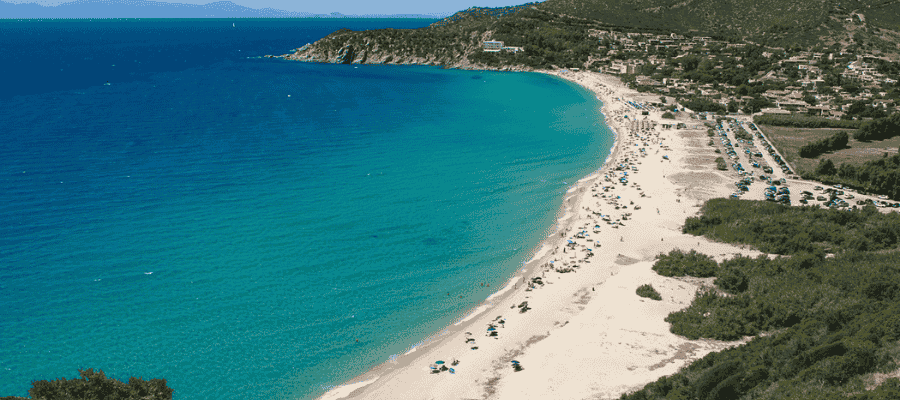
The beach stretches for around one kilometre and is enclosed between the Capo Boi headland and hills covered in Mediterranean scrub.
Its real advantage is the balance between sea, space and services: directly behind the beach lies the small village of Solanas, where you can find everything you need for a full day by the sea.
It is particularly suitable if you are travelling with children or want to avoid very small, crowded beaches.
Mari Pintau: the “painted sea”
The name Mari Pintau literally means “painted sea”, and one look at the water makes it easy to understand why.
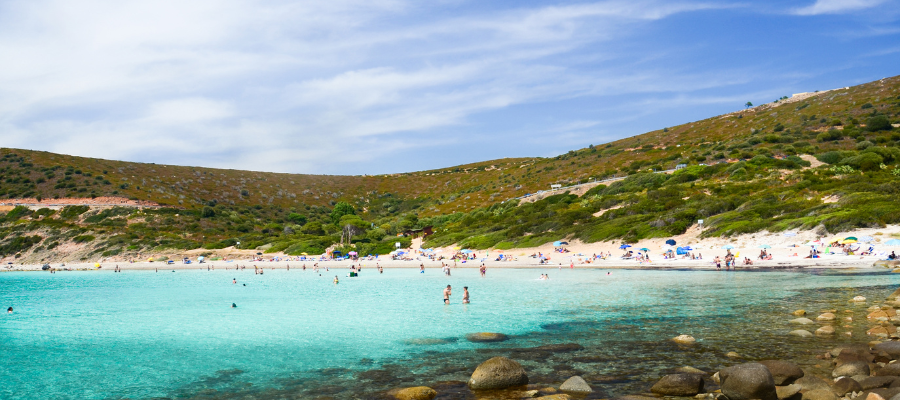
The beach, located along the coastal road between Cagliari and Villasimius, is known above all for its smooth pebbles and exceptionally clear water, with colours ranging from green to intense blue.
It is very different from the long sandy beaches found elsewhere in this guide, and that is exactly why it deserves a visit.
It is particularly appealing for swimming and snorkelling, while it is less suitable if you are only looking for very fine sand.
Costa Rei and Castiadas: kilometres of sand and clear sea
Continuing north-east from Villasimius, you enter the area of Castiadas and Costa Rei.
Here the landscape changes again: small bays alternate with long sandy beaches, usually with gently sloping seabeds and a wide range of facilities and services.
Costa Rei stretches for several kilometres, with pale sand and sea colours ranging from emerald green to blue.
Cala Pira: one of the most beautiful bays in Castiadas
Cala Pira is one of the beaches we recommend without hesitation.
The bay is around 400 metres long and is made up of very fine white sand, with tiny fragments that can create pinkish reflections along the shoreline. The sea ranges from turquoise to emerald green, while dunes and juniper bushes frame the beach.
A coastal tower dominates the northern headland, while Serpentara Island can be seen in the distance.
The shape of the bay and the gently sloping seabed also make it very pleasant for families.
It becomes very busy in the height of summer: if you can choose, June and September offer a more relaxed experience.
Cala Sinzias: two kilometres of pale sand
Cala Sinzias, in the municipality of Castiadas, is perfect if you want a spectacular beach without giving up space.
The beach stretches for around two kilometres and is characterised by very pale sand, clear water and a gradually sloping seabed.
Compared with the smaller bays in the area, it feels much more open and offers several access points and services.
It is one of the best options for spending an entire day by the sea, especially for families and groups.
Santa Giusta and Scoglio di Peppino
Santa Giusta is located in the municipality of Castiadas, at the southern end of the long Costa Rei coastline.
The beach is around one kilometre long and is characterised by soft, pale sand.
The main attraction, however, is Scoglio di Peppino, a large pale granite outcrop shaped somewhat like a turtle, marking the boundary between the coastal territories of Castiadas and Muravera.
It is a good choice if you want to combine a beach day with one of the most recognisable natural landmarks of Costa Rei.
Costa Rei: the choice for space and facilities
The long beach of Costa Rei is one of the best options if you prefer a broad stretch of coastline rather than a small cove.
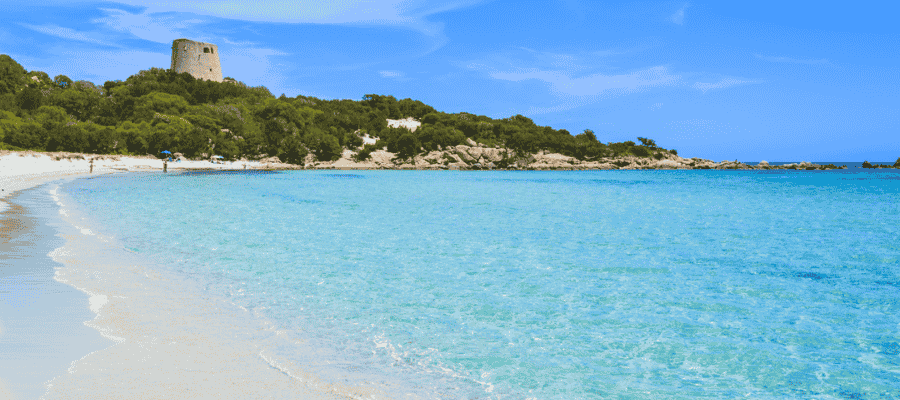
The coastline offers kilometres of fine, pale sand, clear water and a generally shallow seabed. The area also provides a wide range of tourist services.
It is particularly suitable for families, longer stays and travellers who want to explore a different stretch of beach each day without changing area completely.
Cagliari and the Gulf of Angels: beach time without giving up the city
Not every interesting beach in southern Sardinia has to be isolated or wild.
Poetto: Cagliari’s great urban beach
Poetto is Cagliari’s city beach and stretches into the municipality of Quartu Sant’Elena.
Its main strength is the combination of sea, services, sport and social life.
You can spend the day on the beach and stay along the seafront into the evening, moving between kiosks and bars without having to plan a proper excursion outside the city.
Chia: dunes, towers and some of the most beautiful beaches in the south
Travelling south-west from Cagliari, you reach Chia, in the municipality of Domus de Maria.
There is not just one beach here: Chia is an entire coastal system made up of bays, dunes, lagoons and headlands.
Sa Colonia and the Tower of Chia
Sa Colonia is one of the easiest beaches in the area to recognise thanks to the Tower of Chia standing on the headland.
The sand is pale, the water is clear and the natural surroundings are particularly attractive.
It is a good starting point for first-time visitors to Chia who want to combine the sea with beautiful coastal views.
Su Giudeu: Chia’s signature beach
If you can visit only one beach in the area, Su Giudeu is probably the most representative choice.
The beach is very wide, with soft pale sand, while the sea generally has shallow water close to shore.
A distinctive small islet rises just offshore, completing one of the most photographed views along this stretch of coast.
The wide open spaces also make it suitable for families, although it remains very popular during summer.
Cala Cipolla: small, sheltered and scenic
Cala Cipolla offers a completely different experience.
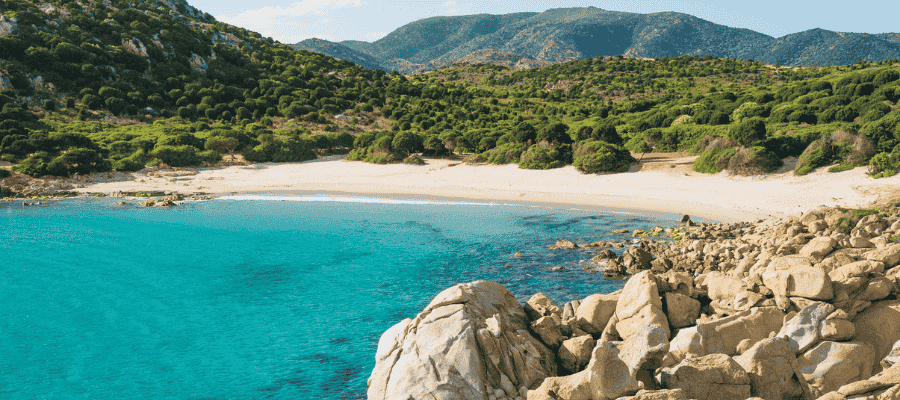
It is a small inlet surrounded by rocky headlands, junipers and Mediterranean vegetation.
The pale sand and transparent water create a much more intimate atmosphere than at Su Giudeu.
It is ideal if you are looking for a scenic cove, although its small size means it can fill up quickly on the busiest days.
Trails towards Capo Spartivento also start from this area, allowing you to combine beach time with a panoramic walk.
Tuerredda: one of Sardinia’s most famous bays
Between Chia and Teulada lies Tuerredda, one of the most famous beaches on Sardinia’s southern coast.
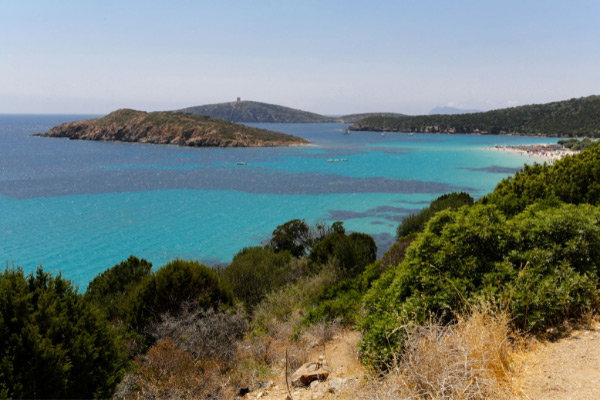
The bay is enclosed between Capo Malfatano and Capo Spartivento and is characterised by very fine sand and sea in intense shades of turquoise and blue.
Its shape often keeps it relatively sheltered, and the scenery can resemble a large natural swimming pool.
Porto Pino and Is Arenas Biancas: white dunes in the Sulcis
As you move towards the lower Sulcis, the landscape changes once again.
Porto Pino is characterised by a long coastal system made up of beaches, pine forests and lagoons.
The most spectacular stretch is Is Arenas Biancas, also known as Le Dune: around one kilometre of large white sand dunes that can rise to approximately thirty metres.
Part of this area lies within a military training zone and access is seasonal, so availability should always be checked before visiting.
The seabed along the Porto Pino coast slopes gradually, which also makes the area appealing for families.
Cala Domestica: sea and mining heritage
In the Buggerru area, Cala Domestica is one of the most distinctive beaches in this guide.
It looks nothing like Villasimius or Chia: it is a deep inlet bordered by high pale cliffs, with sand ranging from white to amber and gold, and turquoise water.
The landscape also tells the story of the Iglesiente’s mining past: until 1940, minerals were shipped from the cove, and the remains of warehouses and tunnels are still visible today.
One of the tunnels leads to a second, smaller and more secluded cove.
A coastal tower also stands on the headland and can be reached via a walking trail.
Cala Domestica has parking, a refreshment point and an access walkway, and is reached via the SP83 when coming from Buggerru, rather than via a long unpaved road from the SS126.
Costa Verde: the wildest side of Southern Sardinia
If Villasimius and Chia represent Sardinia’s tropical-looking waters, the Costa Verde offers the opposite experience: wide open spaces, dunes, mountains and long beaches exposed to the open sea.
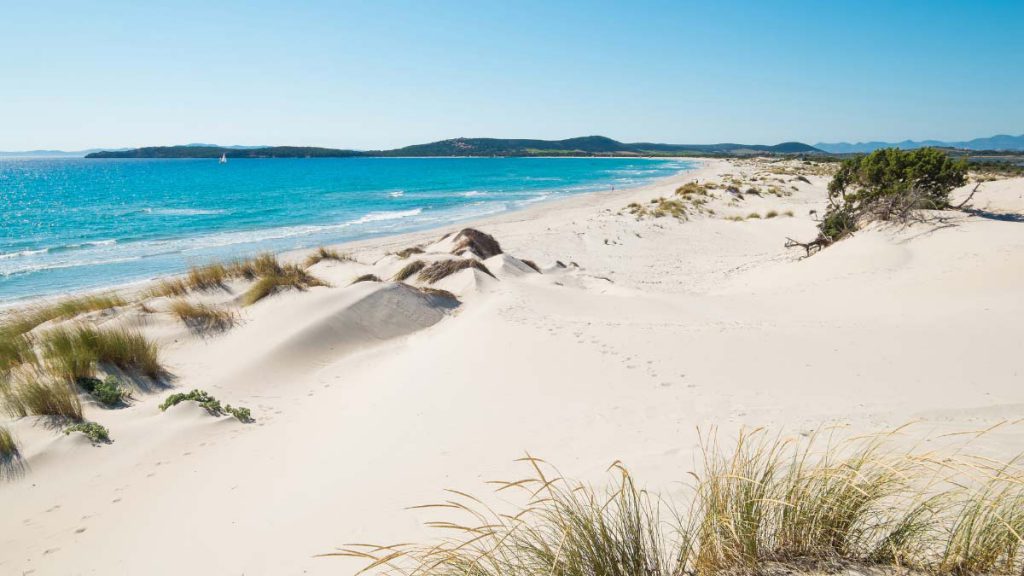
Scivu: three kilometres of almost untouched nature
Scivu, in the municipality of Arbus, is one of the most striking beaches on the Costa Verde.
The long beach is framed by dunes and rocky cliffs and lies in an area with very little development.
Here, the main attraction is not the presence of facilities or beach bars, but the feeling of being immersed in a much more isolated landscape.
Scivu is particularly suitable if you are looking for silence, nature and long walks along the beach.
The area is also connected to Capo Pecora by a scenic coastal hiking route.
Piscinas: immense dunes facing the sea
Piscinas is probably the most surprising landscape on the Costa Verde.
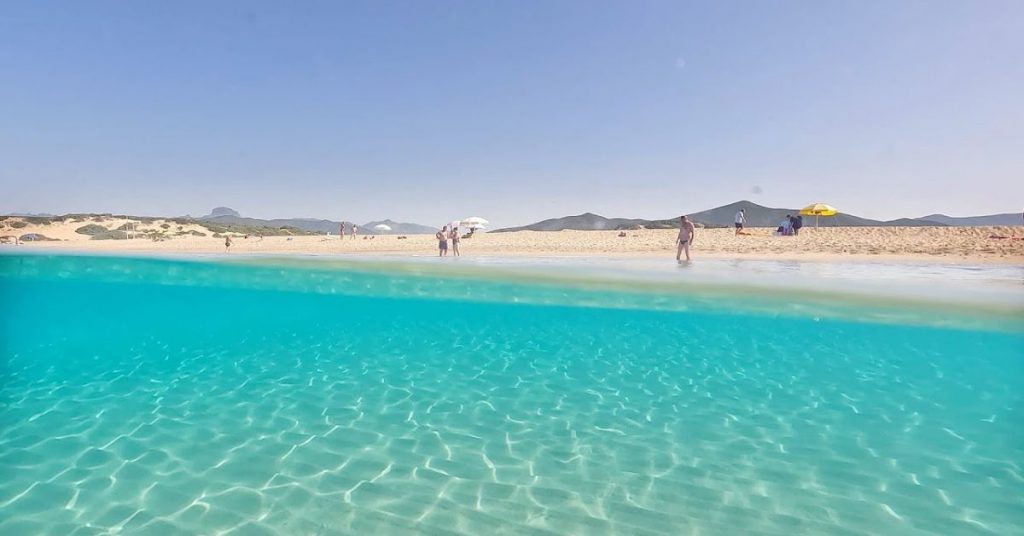
A vast dune system stretches behind the beach, giving the area an almost desert-like appearance.
You do not come here just to swim: you come to experience the meeting of dunes, Mediterranean vegetation, mountains and open sea.
The scenery is completely different from the sheltered bays of the south-east.
It is the place to choose if you love Sardinia’s wilder side and want to dedicate a full day to an area with very little urban development.
Which part of Southern Sardinia should you choose?
Not every stretch of coastline suits the same type of holiday.
If you are looking for turquoise water, pale sand and good facilities, choose Villasimius, Castiadas and Costa Rei.
If you want to alternate between beaches, coves and panoramic scenery, Chia and Tuerredda are among the most complete areas.
For bright white dunes and shallow water, Porto Pino is one of the most distinctive destinations.
If, on the other hand, you want to discover the island’s wildest side, choose Cala Domestica and the Costa Verde.
Cagliari and Poetto are ideal if you want to combine beach time with city life.
Which beaches are best for families?
For families with young children, it is usually best to choose wide beaches that are easy to access and have gently sloping seabeds.
Some of the best options include Porto Giunco, Solanas, Cala Sinzias, Costa Rei, Su Giudeu and Porto Pino.
Cala Pira is very pleasant thanks to the shape of the bay, although space can become limited during the busiest periods.
Cala Cipolla is beautiful but small, while Scivu and Piscinas are better suited to travellers looking for nature and wide open spaces rather than a full range of services.
Which beaches are best for snorkelling?
For snorkelling, the best choices are generally bays with rocky sections and mixed seabeds.
Mari Pintau, Porto Sa Ruxi and Cala Pira are excellent options along the south-eastern coast.
Cala Domestica is also very interesting thanks to the cliffs surrounding the bay. The regional tourism authority also highlights the richness of its seabed.
Which beaches require more planning?
Some destinations are worth checking carefully before setting off.
Punta Molentis may be subject to seasonal access regulations.
Tuerredda is subject to visitor limits during the high season.
Is Arenas Biancas lies partly within a military training area and has seasonal access restrictions.
For these beaches, it is always best to check access rules, parking, any booking requirements and current restrictions a few days before your visit.
How to plan an itinerary around the beaches of Southern Sardinia
Southern Sardinia is too large to try to visit all of these beaches in just two or three days.
The best solution is to divide the trip into geographical areas.
Itinerary 1: Villasimius and Castiadas
You can organise a day between:
Villasimius → Porto Giunco → Punta Molentis → Cala Pira
or, if you prefer a more relaxed pace:
Villasimius → Porto Giunco → Cala Sinzias.
Itinerary 2: Costa Rei
You can dedicate a day to:
Cala Pira → Cala Sinzias → Santa Giusta → Costa Rei.
These destinations lie along the same coastal route, so you can decide where to spend more time depending on sea conditions and how busy each beach is.
Itinerary 3: Chia and Teulada
One of the most scenic routes is:
Chia → Su Giudeu → Cala Cipolla → Tuerredda.
If you still have time, you can continue along the panoramic coastal road towards Teulada.
Itinerary 4: Sulcis and Costa Verde
This area deserves at least two days.
One day can be dedicated to:
Porto Pino → Is Arenas Biancas → Teulada.
Another to:
Cala Domestica → Buggerru → Scivu or Piscinas.
Trying to combine Porto Pino, Cala Domestica and Piscinas in the same day would mean spending too much time in the car.
Do you need a car to visit the beaches of Southern Sardinia?
It depends on where you are staying, but if your itinerary includes several different areas, having a car offers a clear advantage.
The most interesting beaches are spread across hundreds of kilometres of coastline, and some are reached via scenic roads or detours far from the main towns and cities.
Having your own vehicle allows you to choose the beach according to sea conditions, combine nearby destinations, reach areas with limited public transport and get to parking areas and access points without depending on timetables.
If you are planning a more complete trip, you can also read our guide to exploring Southern Sardinia by car.
Frequently asked questions about the beaches of Southern Sardinia
What is the most beautiful beach in Southern Sardinia?
There is no single answer. Punta Molentis, Porto Giunco, Cala Pira, Su Giudeu and Tuerredda are among the most iconic for the colour of the sea and the scenery. Piscinas, on the other hand, offers a completely different and unique landscape thanks to its dunes.
Is Villasimius or Chia better for beaches?
Villasimius offers a high concentration of bays with turquoise water, good facilities and several different beaches within just a few kilometres of one another.
Chia is better if you are looking for dunes, wide beaches and coves that can be combined with the spectacular coastline towards Tuerredda and Teulada.
Which beaches are closest to Cagliari?
Poetto is the most immediate option.
Heading east, you can reach Mari Pintau and Solanas; travelling west, you can instead reach the beaches of Chia.
Where can you find the best sea in southern Sardinia?
The areas best known for particularly clear water include Villasimius, Castiadas, Costa Rei, Chia and Teulada.
The Costa Verde, by contrast, offers more open sea conditions and a much wilder landscape.
How many days do you need to see the best beaches in the south?
To explore Villasimius, Costa Rei, Chia and at least one area between the Sulcis and Costa Verde at a relaxed pace, we recommend at least five or six days.
With only two or three days, it is better to focus on a single main area and avoid long transfers.
What to see beyond the beaches
Southern Sardinia offers much more than the sea.
You can alternate beach days with a visit to Cagliari, nature trails in the Sette Fratelli Park, the mining heritage of the Sulcis-Iglesiente or the natural landscapes of the Costa Verde.
If you are travelling with children, you can also read our guide to where to go in Sardinia with children.
A journey through completely different coastlines
The real strength of Southern Sardinia is its variety.
In just a few days, you can go from the turquoise waters of Punta Molentis to the dunes of Chia, from the white sand of Porto Pino to the cliffs of Cala Domestica, and all the way to the almost desert-like landscapes of Piscinas.
For this reason, the best way to explore the area is not to choose just one beach, but to plan your trip by geographical zone.
With a car, you can decide each day which stretch of coastline to explore and make the journey itself part of the experience, especially along the scenic roads connecting some of the most spectacular destinations in southern Sardinia.